NHS England are delighted to announce the launch of the London Healthcare Science Awards, a platform dedicated to recognising and celebrating the exceptional contributions of healthcare scientists in our region. In the spirit of fostering innovation, collaboration, and excellence within the healthcare science community, these awards aim to spotlight individuals and teams whose dedication and ingenuity have made a difference. Whether it’s a colleague, team member, or yourself, this is an opportunity to acknowledge and celebrate those who have made a lasting impact.
You can nominate in more than one category, please complete a separate form for each nomination.
Categories:
System leadership Award
Service Leader of the Year Award
Aspiring Leader / Manager Award
Research and Innovation Award
Patient Impact Award
Community and Outreach Award
Digital and Medical Technology Innovation Award
Educational Leadership Award Nomination details:
The deadline for you to submit your nomination form is Friday 28th February 2025 to the email account england.londonscientificoffice@nhs.net.
We look forward to celebrating the passion and dedication of all our Healthcare Scientists.
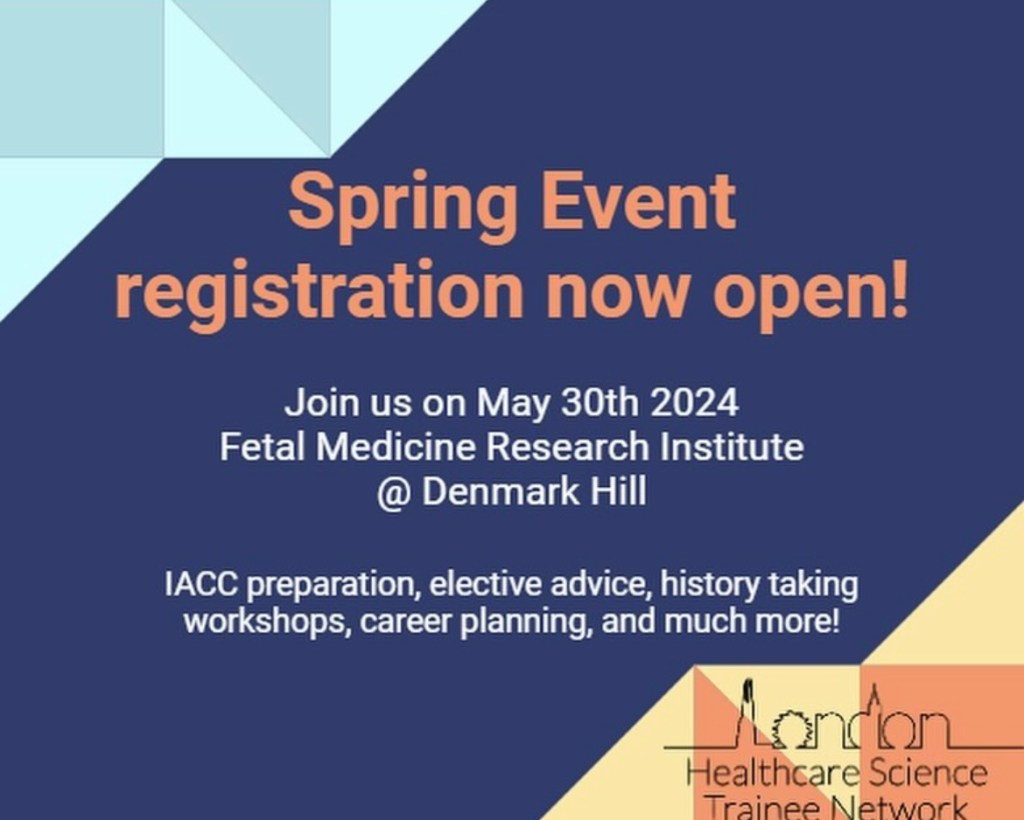
This full day training event will include a range of sessions designed to support your STP experience and also help you tick off some Professional Practice/Professional Foundations competencies.
While the full Agenda is waiting to be confirmed, we are excited to announce that in addition to hosting sessions on career pathways after the STP and STP elective experiences, we will once again be offering specialised talks aimed at helping trainees complete training activities/competencies that may otherwise be hard to target:
Toby Gibbons, the Clinical Coding Training Manager at Guy’s and St.Thomas Hospital will once again be joining us to deliver a talk which should help trainees in their third year complete SCC110 [18] (Use clinical coding and medical terminology in accordance with stated guidance, as appropriate to scope of practice). As for 1st and 2nd years this will still be an interesting talk to help better understand different aspects of HCS.
We understand that many trainees are struggling with how to comple S-C1 TA4 (Audit your digital footprint for adherence to your organisations policy and professional standards, and make recommendations for future professional and personal practice). To support trainees in this, current STP’s will talk through their approach to getting this competency signed off.
Additionally, Dr. Gillian Twigg, a Prinicipal Clinical Scientist & Diagnostic Sleep Service Lead at Imperial College Healthcare Trust will be returning to deliver a talk on patient history taking. This talk will help address learning outcomes 3 and 4 of S-C1 Professional Practice module. Please note, this will be part of the afternoon patient history taking workshop. To attend this talk please make sure to book a ticket that includes the workshop.
WORKSHOPS
Separate to registering for the training day interested trainees will have the opportunity to separately register for one of two workshops, both of which will run at the end of the day. Please note that as these run side by side it will not be possible to attend both.
PATIENT HISTORY TAKING WORKSHOP (16 spaces only): To complement Dr. Gillian Twigg’s presentation, we have invited two actors from Alchemist to participate in our patient history-taking workshop once again this year. These actors will portray patients, offering trainees a valuable opportunity to develop their clinical communication skills and to receive immediate feedback from our workshop facilitators.
IACC PREPARATION WORKSHOP: To help support 3rd years in the run up to the end-point assessment we are excited to be offering an IACC preparation workshop to help prepare for the IACC interview. Please note this workshop will be available to 3rd year STP’s only
FURTHER TOPICS
Please bare with us while we finalise the rest of the agenda for the 2024 spring Event. However you may expect further talks to focus on:
Last Tuesday marked the first case club session delivered by the new HCSTN committee, and it proved to be a resounding success!
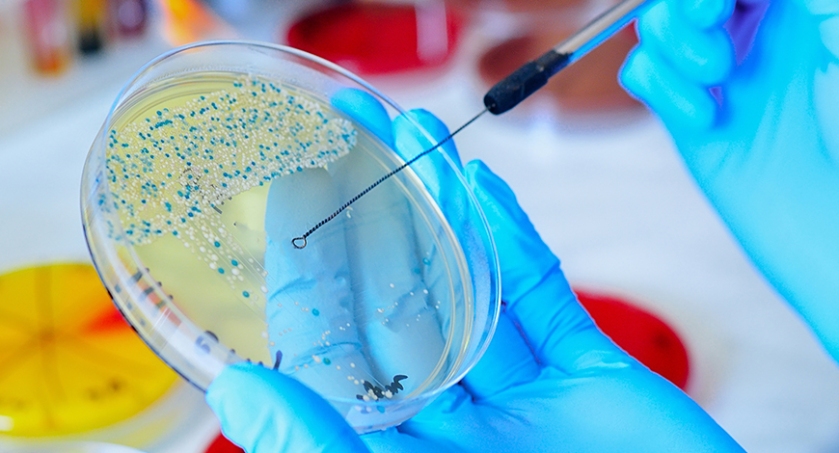
Emily, a final year STP in Clinical Microbiology, presented an engaging and thought-provoking case about a soldier who presented with multiple wounds infected by several species of bacteria, one of which exhibited resistance to all available antibiotics.
It was great to see that trainees from a range of specialties including Biochemistry, Genomics and Microbiology joined the meeting, and we had a very interesting discussion encompassing topics such as:
The requirement for tracking and reporting of antibiotic-resistant infections to government authorities
Regional disparities in the prevalence and types of antibiotic-resistant infections
The evolving landscape of antimicrobial therapies, including phage therapy and the use of silver as an antimicrobial agent
We also discussed the importance of developing new antibiotics, and agreed that the rise in antibiotic-resistant infections is a serious threat to global health that requires significant attention and innovation.
We’re still looking for a presenter for November’s case club, so if you’re interested please email londonhcstn@gmail.com. Hopefully see you all next month!
The 14-20th March 2022 was Healthcare Science Week – a week dedicated to raising awareness of the amazing work of healthcare science professionals, and celebrating the impact they have on patient care. Did you know that there are over 50,000 healthcare scientists working in the NHS and public health services in 50 different specialisms? The work of healthcare scientists underpins 80% of all diagnoses. For each day of HCS Week 2022, we posted a ‘Day in the Life’ of a different healthcare scientist on our Twitter and Instagram channels. See the whole week collated here!
With thanks to Ruth Braham, Katie Cheswick, Rachael Franklin, Charlotte Jones, Gabriel Santos, Alex Shaw and Linda Shi.
MONDAY: Vascular Science
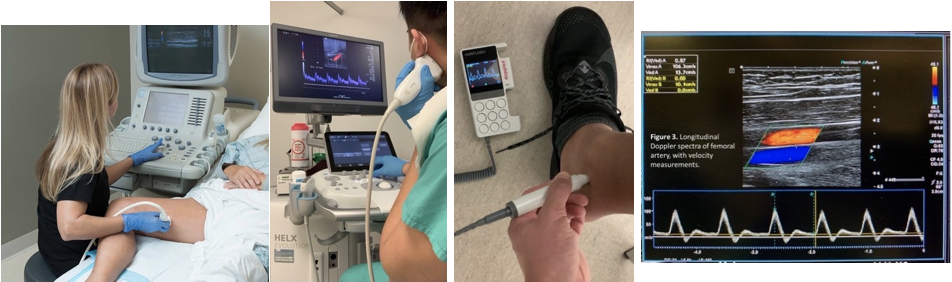
Vascular science is about the assessment of how blood flows in the body through arteries and veins which can be scanned and visualised in real-time using an ultrasound machine.
An ultrasound scan requires hand-eye coordination and dexterity for moving the ultrasound probe over a patients’ skin to detect their blood vessels which can be viewed on a digital screen. During these scans, vascular scientists use their knowledge of haemodynamic, ultrasound physics and vascular disease to assess blood vessels for plaque build-up, blood clots, aneurysms and measure parameters of blood flow. Such scans assist with the diagnosis of vascular disorders, including transient ischaemic attack (TIA), stroke, aneurysm, peripheral disease, deep vein thrombosis and varicose veins.
Our day-to-day role involves interacting with patients, particularly the elderly and those with disabilities and pre-existing health conditions. Responsibilities include taking patient history, performing ultrasound scans and reporting results to referring clinicians such as vascular surgeon’s, radiologist, specialist nurses or GPS.
TUESDAY: Clinical Engineering
As a Clinical Engineering STP trainee you could be working in a variety of roles. In a hospital, the Clinical Engineering team will typically be involved in managing the operations and logistics of all the medical devices used within the hospital. But Clinical Engineers can also be found in Rehabilitation Engineering services where they work to provide customised wheelchair seating, orthotics and communication aids to patients. Additionally, Clinical Engineers work in patient facing roles across a wide range of Clinical Measurements services, such as Gait Analysis, Urodynamics, GI and much more. Here Clinical Engineers apply their understanding of Physics and Engineering principles, alongside their anatomical knowledge, for diagnosis, monitoring and treatment of patients.
As a Clinical Engineering STP trainee specialised in Clinical Measurement, I spend the majority of my time in a paediatric gait laboratory. Roughly 40% of my time is spent in patient appointments, 40% on processing and reporting on the data gathered and the remaining 20% of time is spent on research projects or MSc commitments. Gait analysis appointments last between one and half to two and half hours and involve a variety of different measurements; motion capture technology is used to perfectly record the way an individual walks in 3D space, then additional measures of the electrical activation of the muscles and forces generated during walking are taken alongside the passive range of muscles and ultrasound imaging of the muscles. These measurements are all used to explain why a patient walks in a particular way and how they can walk more easily and comfortably.
WEDNESDAY: Ophthalmic and Vision Science
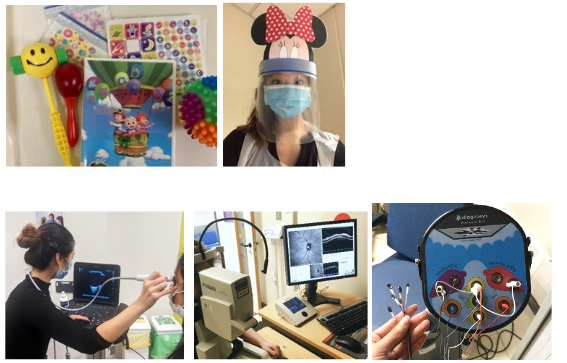
Hi I’m Linda and I’m a 3rd Year NHS STP trainee in Ophthalmic & Vision Science (OVS) at Great Ormond Street Hospital for Children NHS Foundation Trust. As OVS scientists, we carry out lots of different specialised tests to investigate the eyes and visual pathway (from retina to brain) – to help diagnose different conditions that might affect how someone sees!
We start the day by powering up our necessary equipment and performing daily checks. This is important to make sure all components are working, electrically safe, and properly calibrated to ensure accuracy of our results. We look through our patients booked for the day to get an understanding of their medical history, reason for referral, and any special adjustments they might need. We see children of all ages (from tiny babies to teenagers), and of all levels of vision, abilities and backgrounds – so we need to tailor our investigations both to the individual patient and to the diagnostic question.
As you can imagine, getting an active toddler to cooperate with tests that require lots of staying still is not always easy! We work together closely and dynamically as team with colleagues and parent/carers to help obtain the best data we can, as well as make the appointments fun for the young patient. Luckily, we’re well-stocked with toys, stickers, cartoons and songs.
The appointment might involve visual electrophysiology tests, ultrasound imaging, colour vision testing, eye-movement recordings, and/or retinal imaging. We then analyse and interpret the data to produce a clinical report of our findings, which the referring clinician will use to guide discussion during the consultation with the patient and their family.
As an STP trainee, as well as my daily clinical role, I have training and competencies to complete towards my portfolio, and sometimes academic teaching as part of the MSc, as well as my own research project. There are also additional opportunities to be involved in clinical research, audits and innovation, and healthcare science outreach. It’s a varied, exciting role where you’re learning every day, and using your knowledge and skills to benefit patient management.
THURSDAY: Genomics
First of all – what is genomics?
Genomics is the term used to refer to the study of the human genome. Whilst this field can also be referred to as genetics, genomics is now more widely used to reflect changes that have occurred in the field as we have moved from looking at individual genes to looking at large panels of different genes. Whilst this has greatly improved our ability to diagnose patients it has also provided new challenges.
Currently I’m on placement in the inherited cancer team, this largely involves analysing panels of genes associated with inherited high-risk of cancer, looking at the results of panels and classifying variants according to standardised criteria, looking at things like the prevalence in healthy individuals and those with cancer, functional analyses and information published about the variant. All this helps us to decide whether the variant is or isn’t disease causing. Complex cases are discussed at a regular Multidisciplinary team meetings to ensure a wide variety of expert input. Once any variants have been classified, I write the patient’s reports stating what has been found and what this means for them and their family
Throughout the STP I have worked in a wide variety of different teams looking at a wide range of different conditions and at test methodologies. From looking at the whole genome for large scale changes using Microarray or Karyotyping to single gene sequencing for specific conditions.
When performing any test it is important to understand what results mean for the patient and the benefits and limitations of the specific test used, all this information should be included on the patients report. It is also important to understand the technological aspects of testing and what quality control methods there are in place to make sure testing is accurate.
Whilst we don’t usually come into direct contact with patients the patient is always at the heart of the diagnostic service. In the first year of my training, I spent time with the Genomic Counselling service, who help patients and families through the testing process. This highlighted the importance of these results and the genuine impact these have on patients’ lives, and the impact on the patient’s sense of identity, their relationships, and their experience with genetic disease.
Overall, I am thrilled to be part of such an important and rapidly changing service and am looking forward to seeing what new opportunities and challenges the coming years bring.
FRIDAY: Medical physics
Hi, I’m Rachael and this is a day in the life of an Imaging with Non-Ionising Radiation STP Trainee. My Medical Physics specialism covers MRI and Ultrasound Imaging, so my teams provide Physics and other technical support to radiographer, sonographer, radiologists, and other users of these scanners.
My days involve setting up new MRI pulse sequences, to improve the clinical imaging or for research studies; QA and acceptance testing, using test objects to measure the performance of scanners; providing safety advice, training, developing safety policies and performing audits, to ensure patients and staff are receiving and performing these scans safely;
troubleshooting scanner problems; planning service improvements and undertaking research projects, such as establishing new QA procedures, to evaluate and expand our clinical services; and post-processing clinical scans.
SATURDAY: Cardiac Physiology
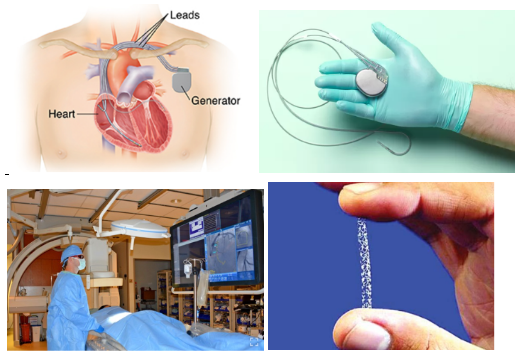
Cardiac physiologists are involved in the diagnosis and treatment of patients with heart conditions. I have chosen to specialise in cardiac rhythm management rather than echocardiography (ultrasounds of the heart). In cardiac rhythm management I perform and support a wide range of non-invasive and invasive procedures. My time is mainly split between pacing clinic and the catheterisation labs. In pacing clinic, we review patients with pacemakers and implantable defibrillators. We perform a range of tests to ensure the battery and leads that go into the heart are working well. Additionally, we assess patients’ symptoms and any stored arrhythmias. Based on all of these we may make changes to the device settings and programming if required.
In the catheterisation labs patients undergo a large variety of minimally invasive procedures that uses x-rays to guide the procedure. Small tubes (called catheters) are inserted via veins or arteries and fed into the heart. A common procedure is unblocking coronary arteries using small balloons and stents to hold the artery open, helping to prevent or treat a heart attack. Other procedures include pacemaker insertion or battery change, valve replacements, measuring the pressures in the heart and ablations (burning or freezing small sections of the heart to help stop irregular heart rhythms). While the consultant performs the procedure the role of the cardiac physiologist is to monitor the patients haemodynamic and ECG, perform additional tests, get equipment and write the report.
As part of the IACC session in our recent Spring Event, we were kindly joined by Professor Berne Ferry (Head of NSHCS, Dean for Healthcare Science) and Carol Higgison (Head of Assessment NSHCS), who helped to answer some of the questions put forward by attendees.
7th Mar 2022
Q: What should the timescale be for completing the IACC? When should we be starting this?
A reminder that the IACC is 3500 words narrative and 45 min interview. Deadline for the narrative is 16th June. It is strongly recommended not to leave this to the last minute and to try and work on getting your competencies signed off and drafting the sections of your critical reflective narrative to identify what additional evidence you may need.
Q: What are some major changes to the IACC & panel interview this year compared to last year?
Guidance is similar to last year, but trainees should use the most recent 2021 version of the Academy of Healthcare Science the Good Scientific Practice (GSP) https://www.ahcs.ac.uk/standards/. The interview will potentially include one or two scenario-based questions.
Q: For current Year 1s and Year 2s, will future completion likely revert back to an OSFA style assessment?
There is currently no plan to revert back to the OSFA style assessment. The IACC assessment is still new and so will continue to be improved between years.
Q: How do you recommend we prepare for the panel interview? Will it be based on our knowledge of the subject?
The panel interview will be assessing your readiness to practice and will include some scenario-based questions that will cover or more GSP domains, professional practice, and core modules. Ensure you are clearly identifying which GSP competencies are important for your role. You should still be targeting 100% completion of your portfolio for the IACC, but you can also explain how COVID has impacted your learning. It will be recognised that the IACC interview takes place 3 months before the deadline to fully complete your OneFile portfolio.
Q: What depth of reflection is expected within the IACC – do we need to say how our experiences made us feel and what we learnt?
Reflection is designed to help us process our emotions and learnings. The reflection in the narrative will be about reflecting on experiences, and focused on what you have learned and how you translate that into current practice E.g. Did this give you insight into how to approach a new scenario?
Q: Should we aim to cover every single bullet point within the good scientific practice guide?
The narrative should be a higher level synthesis and summary of your experience, rather than trying to cover every single bullet point. You need to create a narrative of your achievements, development and learning.
Q: Do we need to be reflective in our competencies or just in the narrative?
Yes, if you are already being reflective in OneFile competencies this will be useful for the narrative. If you feel the level of reflection in your portfolio is currently lacking, it may be worthwhile revisiting these competencies.
Q: Do we need to try and cover as many of the Good scientific practice points as possible or a few but in greater depth?
This would be more of an individual choice and trainees should discuss this with their supervisor.
Q: Why haven’t we had any official communication from the national school about the IACC?
There has already been communication about the dates of submission and interviews currently published on the NSHCS website. Monthly updates will be included in the STP Monthly memo from March 2022. Trainees can also contact the official assessment email NSHCS.assessment@hee.nhs.ukwith any questions.
Q: Are there examples of good reflective narratives we can have access to?
Since the narratives are on a ‘pass/fail’ criteria, not easy to say which was particularly ‘good’. The NSHCS do want to share examples of some previous narratives and are currently looking into getting permission from authors of these examples.
Q: Will the scenario situations ever be with patient actors?
No this will not happen with the IACC.
Q: For specialisms where you can do the competencies in a range of departments how do you ensure our assessor is from a relevant area?
Q: How does the school decide who your panel interviewers should be?
Interviewer panel will be experts in your specialty but will not be your own training officer. This year there will be a drive to broaden recruitment to a wider panel. While it is recognised that different specialisms will have different requirements and priorities, there will still be an aim to standardise the equivalence of questions asked in the panel.
Q: Will there be any webinars or additional information about the IAAC from the school?
Summary by Katie Cheswick, Charlotte Jones and Linda Shi, posted with permission from Berne & Carol. Q&A session facilitated by Gabriel Santos & Linda Shi.
Imperial College Healthcare NHS Trust’s Radiation Physics Department, hosts the London North Training Consortium, a collaboration of seven major London NHS Trusts, and employs twenty-five Trainee Clinical Scientists, following Health Education England’s 3 year post-graduate Scientist Training Programme (STP).
A number of trainees stepped up during the first wave of the of the COVID-19 pandemic to assist the highly-skilled team of Critical Care Technicians, led by Paul Clements.
During the second wave of the COVID-19 crisis, a number of the same and additional trainees volunteered for redeployment to the ICU units across Imperial College Healthcare NHS Trust. The trainees were led and trained by the incredible technologists working there, who in return received help from a group of eager trainee physicists (and a bioinformatician). The trainees learnt a range of new skills, including how to test, service and set up equipment, such as ventilators and blood-gas analysers, ready for use on the wards. To give you a flavour of the experiences of the redeployed trainees, here are a few lines from each of them:
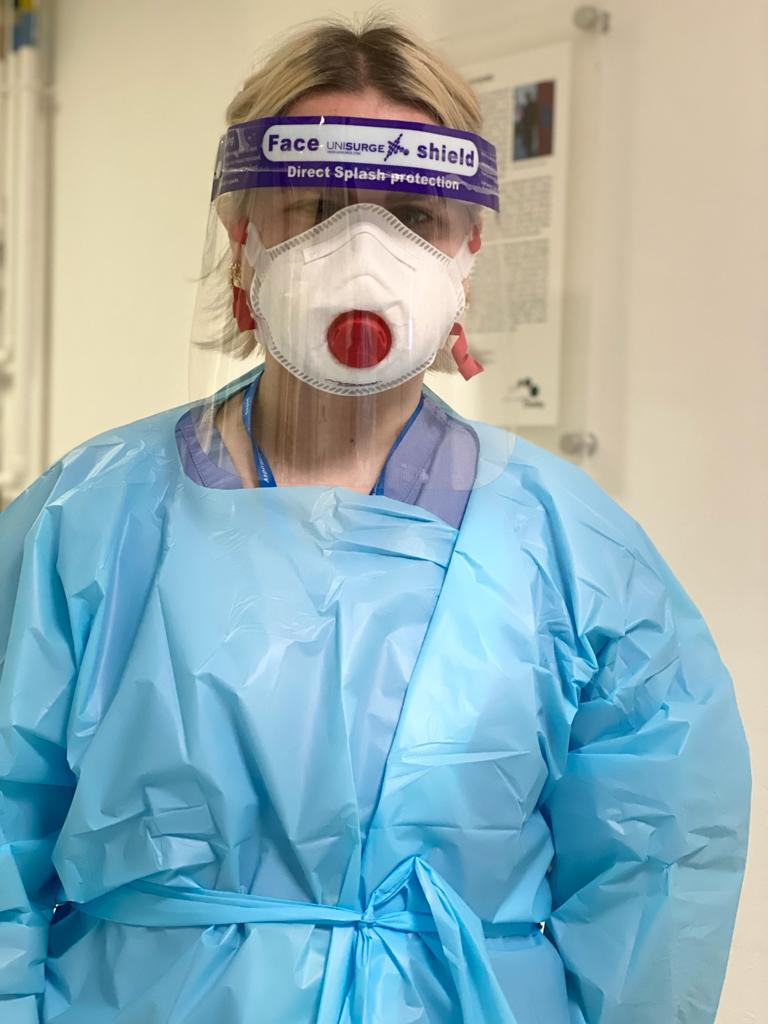
Name: Fred Varley
Specialism: Medical Physics (Imaging with Ionising Radiation)
Year: 2nd
Hospital: Charing Cross
One thing you’ve learnt: Every machine has different alarm to get your attention, and I know far too many of them by heart now.
Most memorable moment: Going through air-tight mask-fit testing and having a bitter mist sprayed in my face to see if it works… But going into wards in full PPE afterwards it was incredible to see how calmly and quickly the ITU staff were able to work in such an uncomfortable and stressful environment.
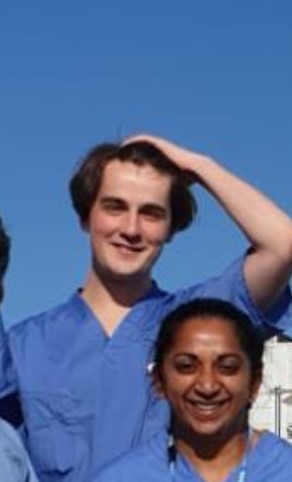
Figure 1: Fred Varley
Name: Meagan de la Bastide
Specialism: Medical Physics (Radiotherapy)
Year: 3rd
Hospital: Charing Cross
One thing you’ve learnt: How to test and prep a ventilator, and also not to take your health for granted!
Most memorable moment: Helping to re-calibrate a blood-gas analyser on a very busy COVID positive ward. We had to maintain a sense of calm in the midst of a very stressful environment in order to get the job done.
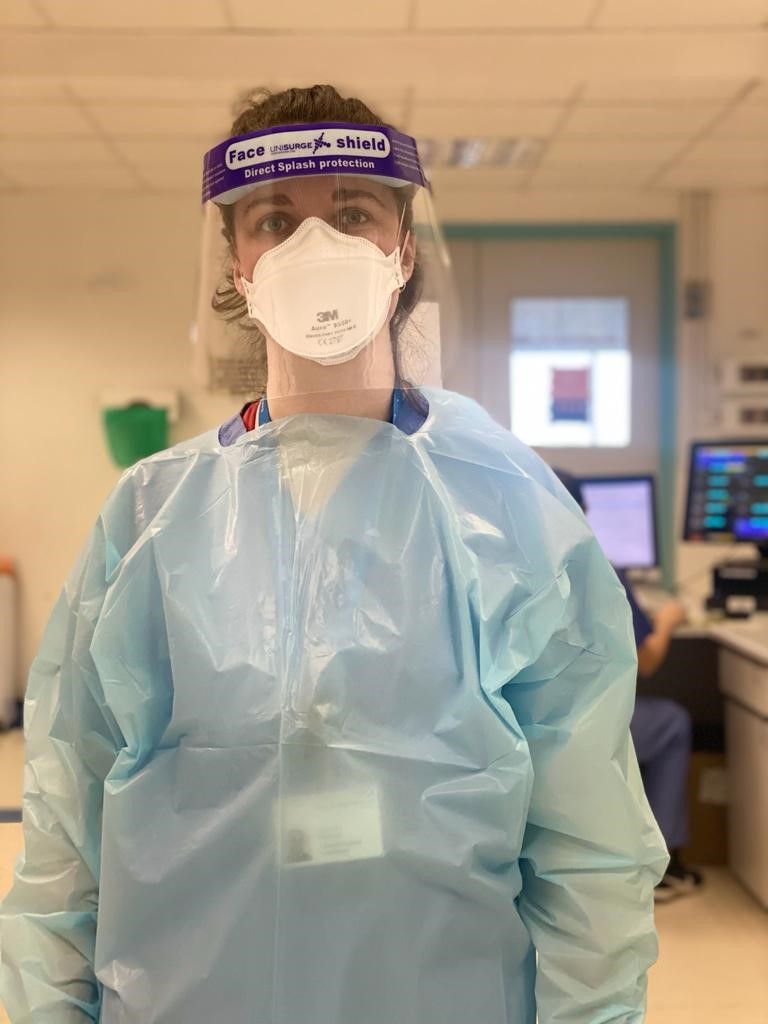
Figure 2: Meagan De La Bastide
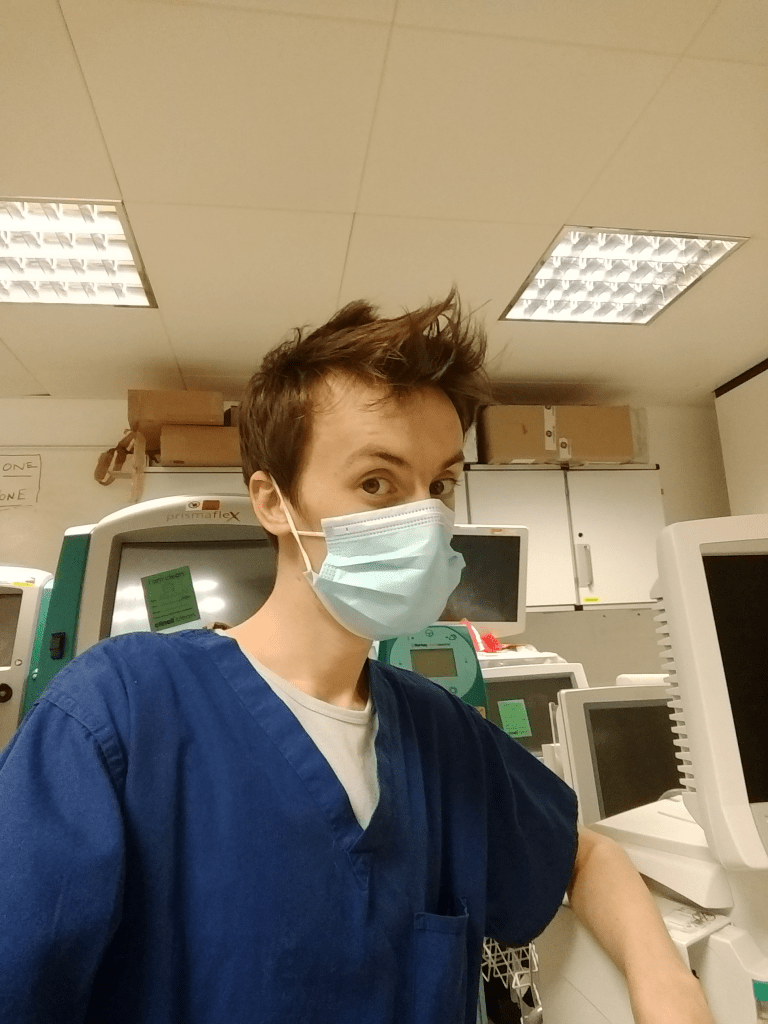
Name: Molly Buckley
Specialism: Medical Physics
Year: 1st
Hospital: Charing Cross
One thing you’ve learnt: I learnt how a CO2 flow sensor works.
Most memorable moment: My most memorable moment was seeing the view from 11th floor for the first time.
Figure 3: Molly Buckley
Name: Oscar Lally
Specialism: Medical Physics (Imaging with Non-Ionising Radiation)
Year: 2nd
Hospital: Nightingale and Hammersmith
One thing you’ve learnt: I learned how important science and technology is in ICU and how frequently it is relied upon.
Most memorable moment: My most memorable moment was having a sign language conversation with a patient who had just come out of a coma that had lasted months over Christmas.
Figure 4: Oscar Lally
Name: Aggie Peplinski
Specialism: Medical Physics (Imaging with Non Ionising Radiation)
Year: 3rd
Hospital: Charing Cross
One thing you’ve learnt: I learnt lots about how all the equipment works that keeps people alive in intensive care.
Most memorable moment: Meeting and working with a whole new lovely team.
Figure 5: Aggie Peplinski
Name: Faissal Bakkali Taheri
Specialism: Medical Physics
Year: 1st
Hospital: Charing Cross Hospital
One thing you’ve learnt: COVID redeployment has affected staff at all levels: medical physicists who become assistant technologists, junior doctors who become healthcare assistant, and nurses who worked at almost all levels of nursing. Patience and flexibility really were keys in allowing the whole of ICU to work as efficiently as humanly possible.
Most memorable moment: Just being there helping the team, made the time at the ICU memorable. Even though the work we did wasn’t that difficult, it alleviated the burden of senior members of staff, who were then able to dedicate precious time to more challenging situations.
Figure 6: Faissal Bakkali Taheri
Name: Isadora Platoni
Specialism: Bioinformatics (Physical Sciences)
Year: 2nd
Hospital: Charing Cross Hospital
One thing you’ve learnt: How to translate between nurse-speak, doctor-speak and tech-speak. All surprisingly different. Most memorable moment: It’s difficult to choose just one moment, as every day was so different. However, my most memorable moment would probably be trying to fix the ventilator of a patient who’d recently had a tracheostomy, despite everything (including the piercing noise of the ventilator alarming) he was smiling and waving at anyone who came to help.
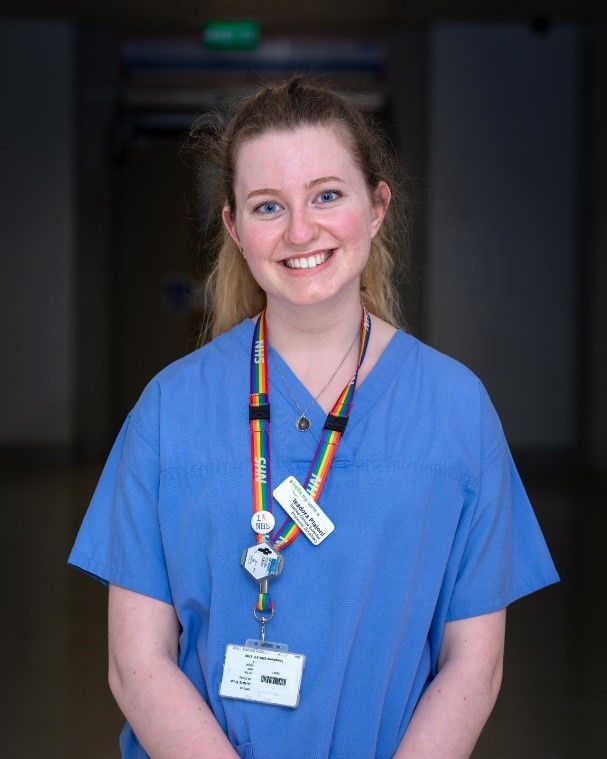
Figure 7: Isadora Platoni
Name: Alice Carlin
Specialism: Medical Physics (Radiotherapy)
Year: 2nd
Hospital: St Mary’s
One thing you’ve learnt: I have learnt about the extensive equipment required to monitor and support patients who are critically ill and the importance of multidisciplinary work in ensuring that patients receive best care.
Most memorable moment: Probably the first time I walked into an ICU ward as the environment is completely different to my usual department.
Figure 8: Alice Carlin
We’d like to extend our thanks to Paul Clements, Arthur Plewa and the whole Critical Care Technology team for the opportunity!
At this year’s Healthcare Science Education
2019 event with a focus on “What is the role of collaboration in education?”
the trainee network board members were invited to facilitate a session on How to select your research project. The
session involved stake holders of various levels including trainees, trainers
and assessors. Thank you to the session participants for sharing their points
of view on How to select your research
project.
The workshop focused around some key
questions, the answers that resulted from the discussions are summarised below:
Question 1: What makes a good research project?
Specific goal
Reasonable time frame
Good supervision
Money and resources
Patience
Impact on the department
Question 2: How might a trainee’s research project benefit your workplace?
Help to boost the research
output, since the trainee in supernumerary
Improve the service by
developing new skills, and technology which can be shared with the department
Raise the profile of the
department
Keep the department up to date
with current research
The trainee can help complete
additional projects
Question 3: Regarding previous projects in your workplace or that you have been
involved in – what aspects were successful or unsuccessful?
Successful:
Trainee presented their idea
for a project to the department, so potential problems could be identified and
gain support/contacts within the department
Supervisor could give
introductions to researchers currently doing work in the area
Great posters and publications
were produced to share the work being carried out
Ethics approval: Join and
taking ownership of a part of a project that already has ethics approval
Carrying out a project that
doesn’t require a lengthy ethics approval process
Regular meetings with
supervisors
Developing contacts through
supervisors
Supervisor enthusiastic about
the project
Developing contacts across
different areas
Unsuccessful:
Involving only one member of staff that understands the project, because if they unexpectedly leave, the trainee is less supported – Trainee shouldn’t only rely on one supervisor but a team of people
People failing commitments e.g. not supplying samples – Need written confirmation and a plan B for everything and everyone.
Project does not involve problem solving
Question 4: What are some of the biggest barriers to facilitating a successful
research project?
Ethics approval takes time – supervisor should advise on limitations
Experience of supervisor
Time constraints with conflicting schedules
Money
Team fulfilling roles
Time constraints on ambitious projects – Projects should have a narrow focus, with the underlying aim to gain MSc
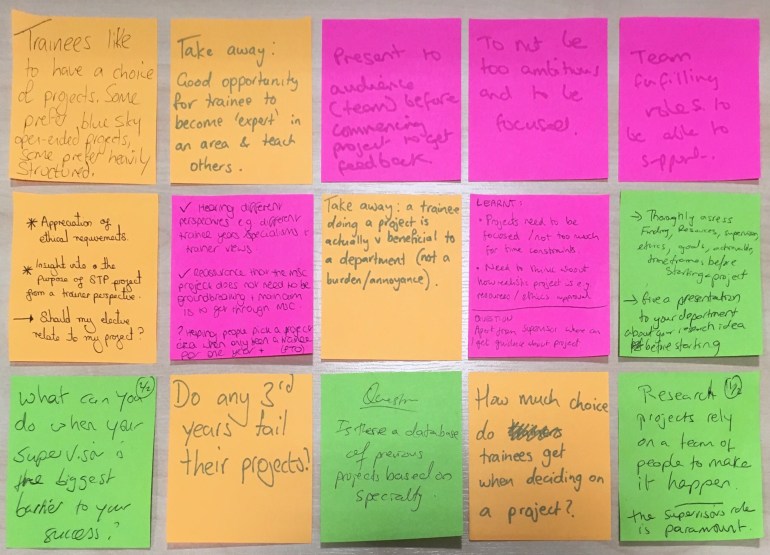
This is the feedback from the session attendees, collected via post-its shown in the image below:
The main points people took away were:
A trainee doing a project can actually be very beneficial to the department (not a burden/annoyance)
Projects reply on a team of people to make them happen
The supervisor’s role is paramount
Appreciation of challenges to gaining ethical approval
Insight into the purpose of STP project from a trainer’s perspective
Projects need to be focused / not too much for time constraint
Need to think about how realistic a project is e.g. resources / ethics approval
Questions people still had at the end were:
Do any 3rd years fail their projects? There are a range of grades achieved, but due to the high standard of candidates failure is very unlikely. Trainees should get regular feedback from supervisors as the project progresses to keep on track.
Is there a list of where students can access research grants? There isn’t a list and it may use up your valuable time looking and applying for grants
How much choice do trainees get when deciding on project? This depends on the department, some departments have a specific project they have been waiting for a trainee to do, and some give a choice of projects.
Apart from the supervisor where can I get support? Good people for support are your peers and colleagues from work.
Is there any help for trainees to pick a project who have not spent much time in their department due to rotations? Not a problem, talk to people in the department, to get an idea of what people are interested in. University supervisors may also be able to give input on what projects are good.
Should my elective relate to my project? No, the elective is separate to the project.
What do you do if your supervisor is the biggest barrier to your project? Find someone else in the department to help you, or schedule a time to speak with the supervisor, to remind them of their commitments, and make use of the academic supervisor.
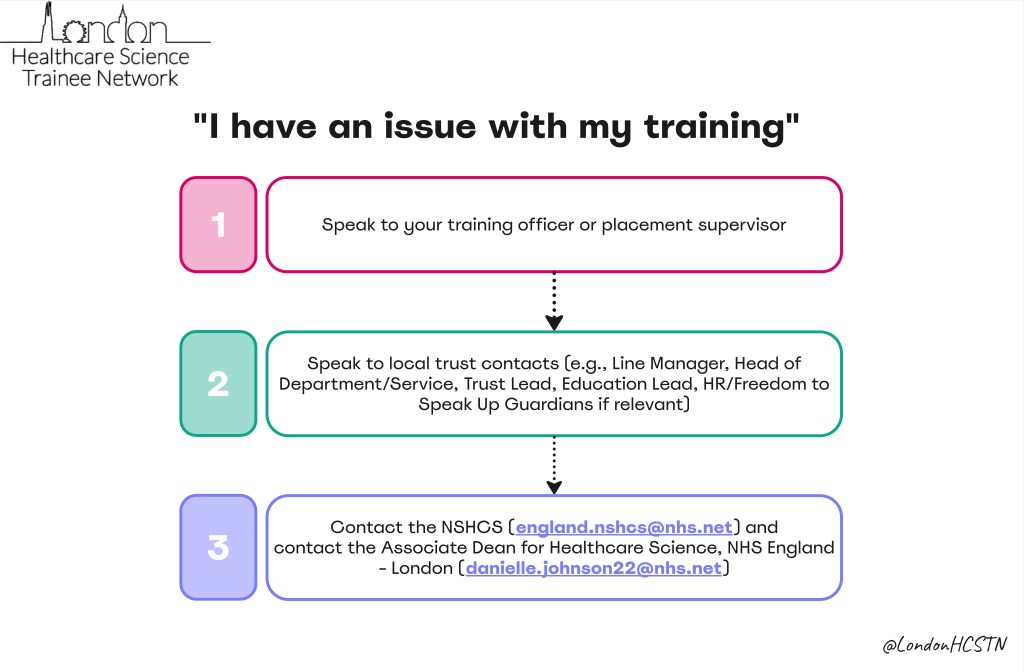
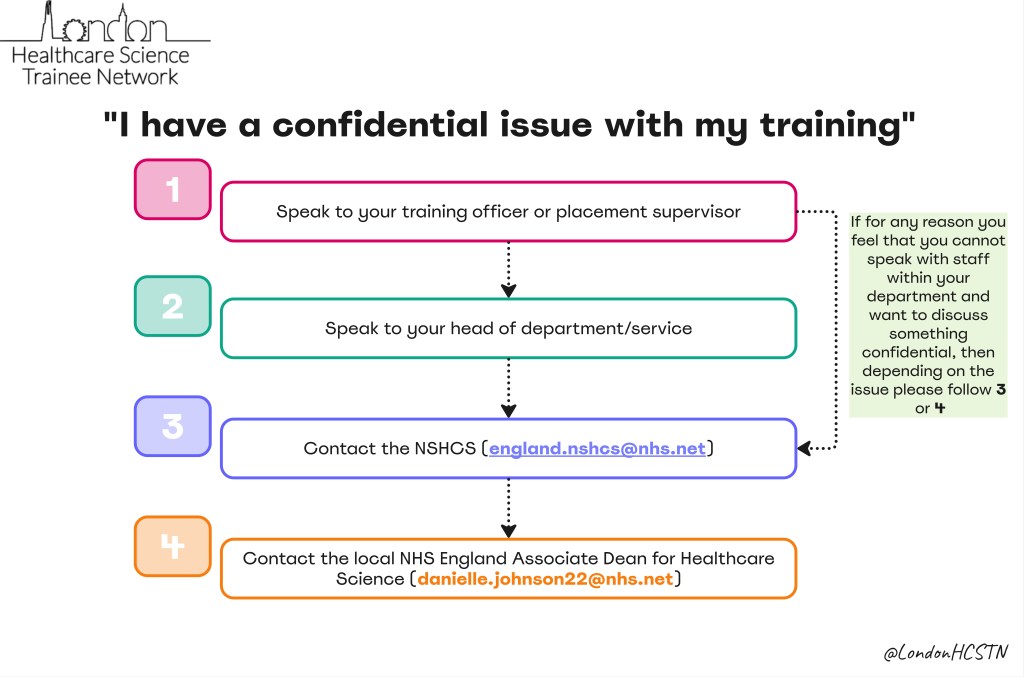
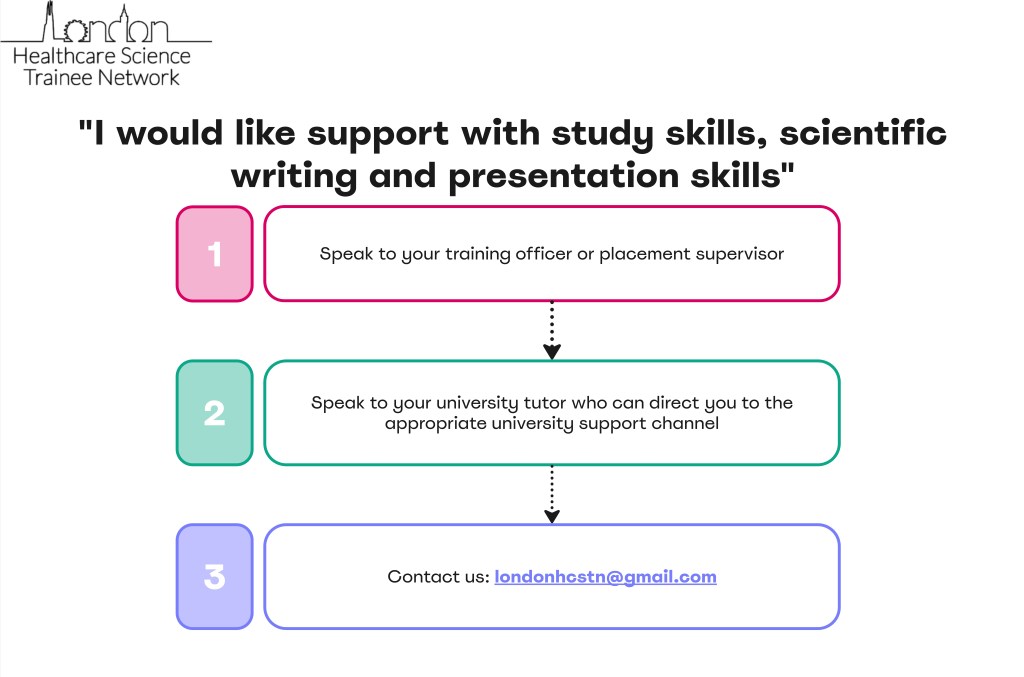
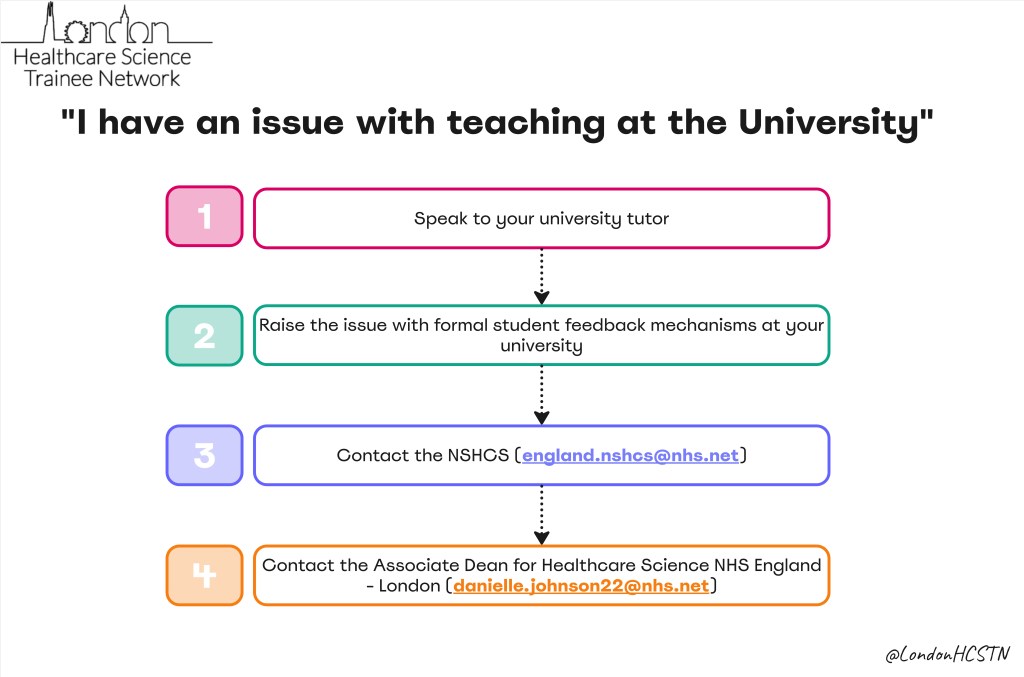
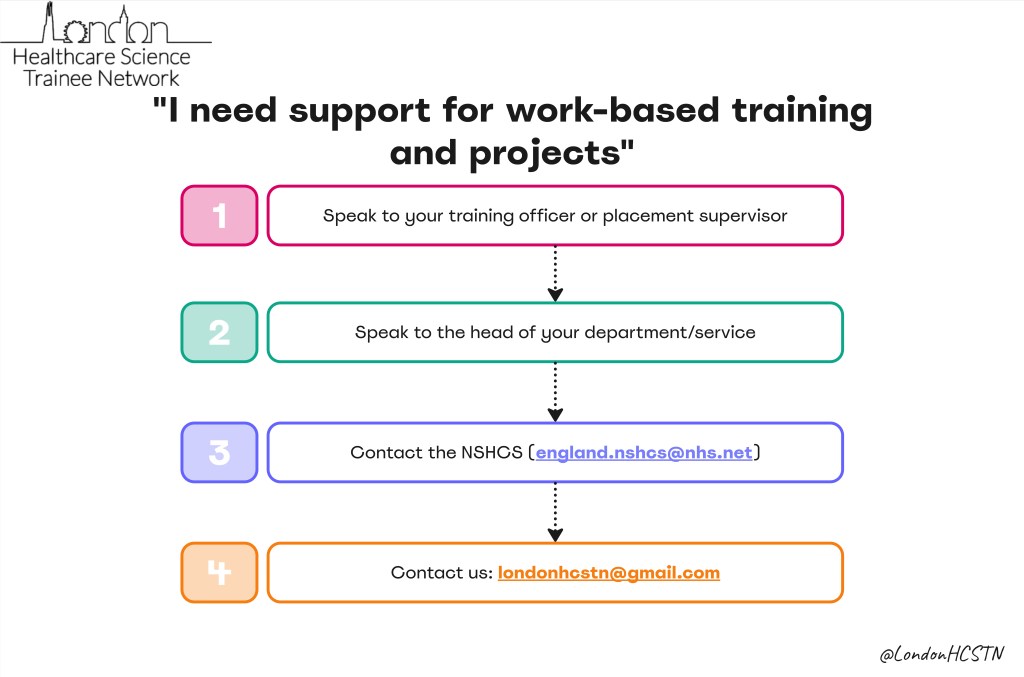
Ideally training should flow smoothly from start to finish. However, we know this is not always the case, and with so many different professional bodies involved in our training, it can be difficult to know who to turn to if certain issues arise.
To get the most appropriate support it is important to raise your issue through the appropriate channels. The flowcharts below outline who to contact in the first place, and how to escalate your issue if you are need further support.
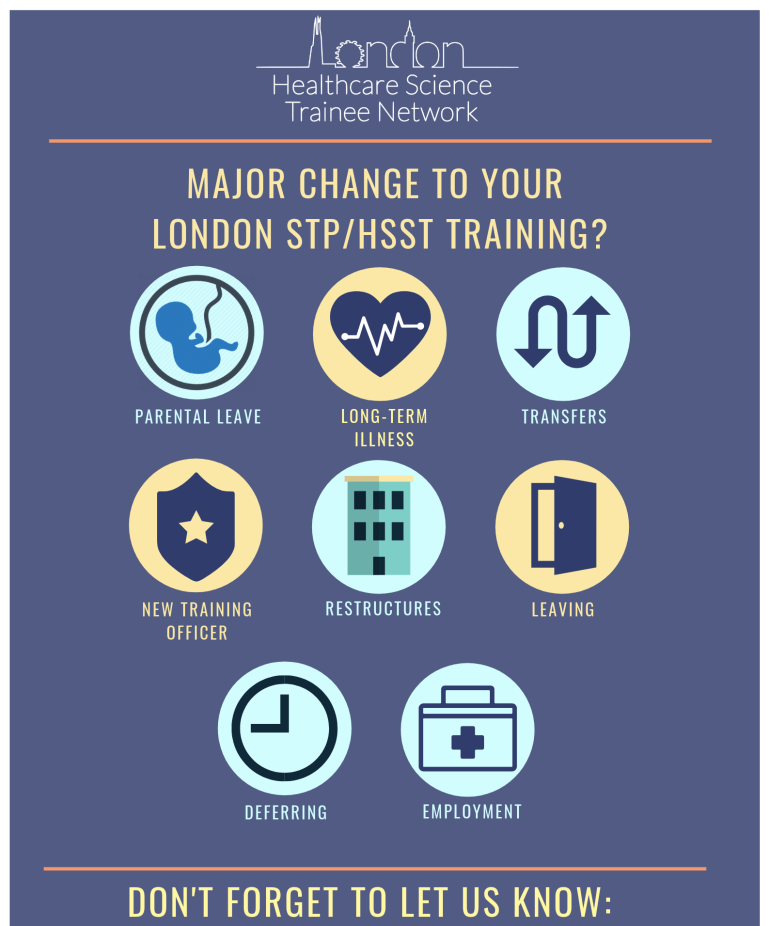
The years between enrolment and graduation will pass without any major hiccups for most trainees. But through no fault of our own, circumstances can change unexpectedly.
When we’re busy adjusting to an unexpected change, we might forget to notify those behind the scenes. Whether you’re on the Scientist Training Programme or the Higher Specialist Scientist Training Programme in London, it’s important to let these stakeholders know simultaneously whenever things change:
National School of Healthcare Science (england.nshcs@nhs.net)
A handover is a bitter-sweet moment. The previous LondonHCSTN board members said their final goodbyes after an eventful and successful year. Keep an eye on our website and social media for official introductions to the new faces of your LondonHCSTN board. After introductions and icebreakers facilitated by our Co-Chairs (Laura Margetts and Emily O’Neill), the board meeting was back to business as usual.
The LondonHCSTN is still in talks with Health Education England (HEE) for financial support of our big events, particularly the OSFA workshop. We are hoping this will mean more resources for supporting as many trainees as possible to attend these popular events in the future.
We’re weeks away from the 2019 intake of STP trainees starting their journey. Planning for our annual welcome event is well under-way. We’re also kicking off recruitment to our buddying scheme in September. Regardless of which stage you are in your training, support is especially valuable from those facing the same challenges.
Have you seen our #FridayFacts on Twitter and Instagram yet? We’re bringing more content in the form of takeovers. The aim is to promote Healthcare Science as a profession We have the most impact the more people know we exist, so oil the gears of the NHS and give us a like!
New trainees should come and say hello at the Birmingham Induction day – we have a stand where you can learn about the trainee network, or life. If you’re attending the LondonHCSEd 2019, we’ll be hosting a workshop on MSc project development. We’re very excited, not least because this event was a highlight for us last year.
Finally, we’re designing our STP experience survey to send out in the coming weeks. It’s a short form and your responses make a big difference. The information is aggregated and fed back to HEE and the National School for Healthcare Science to improve experiences for all current and future trainees.
Nana Mensah Board Member London Healthcare Scientist Trainee Network













 The London HCSTN